





Home
>
Resources
>
Podcast
>
Best But Never Final
>
Private Equity's Balancing Act: Capital Structure and Risk Management
Private Equity's Balancing Act: Capital Structure and Risk Management
Podcast
Private Equity Firms
Portfolio CEOs
Best But Never Final
EPISODE 17
Private Equity's Balancing Act: Capital Structure and Risk Management
Episode Description
Explore the critical aspects of capital structure in the private equity sector with insights from Lloyd Metz, Doug McCormick, and Sean Mooney. This episode breaks down the strategic use of debt versus equity, the implications of leveraging, and the nuances of maintaining lender relationships. It offers a focused look at how private equity professionals navigate risk and optimize returns through smart capital structure choices, essential listening for investors and business owners aiming to understand the financial underpinnings of successful investments.Episode Highlights
-
1:18 - Introduction to the importance of capital structure choices in private equity.
-
3:16 - Exploring the balance between risk and return in optimizing capital structure.
-
6:43 - The leverage effect of using debt in private equity explained through a home-buying analogy.
-
12:14 - Strategies behind determining the amount of debt to use in private equity investments.
-
21:29 - Discussion on the types of lenders and the evolving lending landscape.
-
33:29 - The influence of capital market health on debt cost and the call for simplicity in capital structure decisions.
Episode Transcript
[00:00:00] Lloyd Metz: Get ready to peer behind the curtain of the private equity universe with each episode of best, but never final. Hi, I'm Lloyd Metz joined by Doug McCormick and Sean Mooney. Together, we'll navigate the corridors of private equity, revealing the uncommon knowledge, challenges, successes, and lessons that drive the world of private equity and business forward.
Let's go.
[00:00:37] Sean Mooney: It's great to be back once again with Doug and Lloyd. Doug and Lloyd, how are you guys doing?
[00:00:41] Lloyd Metz: Hey guys.
[00:00:42] Sean Mooney: Gentlemen. All right. We're, the world is spinning fast. The days of the calendar are flying through like the sands through an hourglass. We're looking down the kind of the homestretch of 2024 and we figure what better time than to talk about capital structure.
What do you guys think?
[00:01:03] Lloyd Metz: I'm glad we're talking about that for a second there. I thought you were gonna take us back to days of our lives, the old soap opera that I used to watch with my grandma. Thankfully, we're not doing that.
[00:01:14] Doug McCormick: Nice light topic like capital structure, right? As we talk about capital structure,
[00:01:18] Sean Mooney: one thing that is really important to the outcomes of any investment firm is how they make choices around the types and amounts of capital they use, particularly in private equity.
You're going to use various forms of your money and other people's money, can be from debt, like senior debt, mezzanine debt, unit tranche, seller notes, to equity and equity like structures, which are more like earn outs, which I would put in that category, preferred stock, and then co invest from other equity sources.
And before we go too into that, the reason they do this is just for the reason why when you buy a house, you use your money and other people's money for, and we'll go into that more. But maybe to kick things off in a more deep way around the why, Doug and Lloyd, why do private equity firms use other people's money, particularly things like debt?
[00:02:14] Doug McCormick: Before we go into why private equity uses it, I just think it's helpful to step back and talk capital structure and what we're trying to manage around. And in my mind, this is a game of risk adjusted return and optimizing a capital structure consistent with the risk profile of the asset. And so.
Different parts of the capital structure have different risk profiles. And therefore, if you have a business, let's say that has a big asset base rather than fund the entire thing with equity. If it's a good quality business with good assets and stable earnings, you're better off to fund some portion of the purchase price or some portion of the enterprise value with debt such that you can amplify your return with appropriate risk or not taking much incremental risk because the assets are relatively secure.
So this is really a game of how do I match the return profile with the quality of the business and the risk profile of the business with a capital structure that allows me to And at the same time gives me the right targeted return
[00:03:16] Lloyd Metz: or said differently, you use debt because it's cheaper and lower costs than equity.
Let's just start with that. If equity is looking for 20, 25, 30 percent returns and debt's available at 5%, 10%, 15%, you'll take the cheaper capital versus using your more expensive equity. Where it makes sense, all things being equal, that's usually where it starts. And then a more sophisticated approach is what Doug described.
[00:03:52] Doug McCormick: That's super helpful. I think it highlights some of the trade offs. So Lloyd, in your example, it's reduced cost, but what's it come with? It comes with covenants. It comes with availability tests. It comes with amortization. So you've got to pay down the debt over a specific schedule. And so I'm getting cheaper capital, but it also comes with constraints.
[00:04:14] Lloyd Metz: You're right. Then that's the good news, bad news with debt. It has constraints. It has restraints. As I tell some of our associates, a credit agreement is just one big giant contract, right? It tells you what you can and can't do, what you shall and shan't do. And if you do this, here's what you need to do to remedy it.
And here's when you need to pay me. And this is what you need to send me every quarter, every month or whatever it is. But we had a conversation like this in a previous episode, the debt and that contract, those covenants help form that accountability system that actually is part of what makes private equity work.
So it's not just a small board, it's not just concentrated ownership, it's not just Me and Doug and our colleagues on the board representing the private equity interest as a control investor, or even if you're a minority investor, you now are accountable as the leadership team and the shareholder group, you're accountable to the lenders.
[00:05:17] Sean Mooney: I think those are very good points. And maybe one additional way I would kind of describe this for people who are newer to this industry. Now, you often use the example of like, let's say you're buying a 500, 000 house, a few people can kind of just cut a check for 500, 000, buy an entire house. But what you do is you go to a mortgage lender and they'll say, okay, we're going to, is that 500, 000 house, we'll let you borrow 400.
You put 100 up and as long as you make your payments, you get to keep your house. And then if you look at what happened in the last five years, that 500, 000 house is probably worth a million today. And you've just turned that 100, 000 of equity. Now the house is, if it's 100, 000, let's say you didn't, just to keep the math simple, it's still 100, 000 of equity, and you've got the 400, 000 of mortgage.
So now suddenly that million dollar house, you've created essentially 600, 000 in equity after you pay down your 400, 000 of debt. So you've made six times your money. Now, that's with 80 percent borrowing, right? And so that's kind of what they used to do in the 80s. A lot has changed about that since we've gone time, but it gives you more purchasing power to buy something with your money and other people's money.
And when all things go well, it creates a great amplifier of results. Because it's cheaper capital, it's more capital provides us leverage, and we'll talk about that amplifier can be good and bad, so.
[00:06:43] Lloyd Metz: No, that's absolutely right.
[00:06:45] Sean Mooney: Let's talk about, like, that amplifier. The good news is you can create multiples of money if everything goes right.
What are some of the trade offs in terms of using a lot of debt?
[00:06:55] Lloyd Metz: If you think about Senior debt, we'll call it bank debt just as a shorthand, but most senior debt is going to be floating rate. So there's a base rate set by international banking, money center banks, international banking organizations. It used to be LIBOR, the London interbank borrowing overnight rate.
Now it's SOFR, and then lenders will charge a spread over that, but to the extent short term interest rates set by central banks move up and down, your interest rate will move up and down, and that is something you need to consider as you think about managing your company's balance sheet. As Doug was starting to allude to, so maybe he'll jump in here.
Are my profits, are my cash flows. Stable and steady, or do they move up and down in a meaningful way? In which case you might not want to take on a lot of debt because your interest rates largely set when you borrow. And if it goes up, you need more cashflow to service the same amount of debt. For the last 20 plus years, some people would argue 40 years, the trend in short term interest rates was down.
So your interest rates. Generally over five year periods would decrease and a lot of companies and a lot of private equity firms got used to that environment. Arguably we're in a different environment now, so you have to think about it with the risk being interest rates going up, right? So you kind of have to do a little bit of calculus to see if your cash flows at your company can support the amount of debt that you think you want to borrow today.
Thank you. But then kind of guesstimate a little bit in terms of what interest rates may or may not do going forward. Can you pay down debt with your cash flows? You got to think about all that. If you were a CFO at a portfolio company or just any company, really, that start with those kinds of thoughts.
[00:09:03] Sean Mooney: And Lloyd, what happens if you don't make
[00:09:05] Lloyd Metz: that payment? So lender. That's another consideration that maybe we'll get to talk about today. But even though a piece of debt, the terms, the rates may be similar between lenders, those lenders are people and those people are part of organizations and organizations have philosophies, cultures, and approaches.
And so to answer your question, Sean, it kind of depends on who you're borrowing from. As a firm, do they stay calm when Things go off plan or do they get really tight? Are they by the book? Are they more commercial and reasonable? People come in different varieties and that shows up in terms of how lenders react.
So some lenders are strictly by the book with the credit agreement. You miss a payment, you're in default. The credit agreement says you have x number of days to cure the default. Here's the ways that you can cure the default and they expect you to Follow the letter. Other lenders could be a bit more understanding and commercial, and depending on the severity of the violation, they may allow you to do different things or pay an amendment fee or an extra day or two in the cure period.
There's some latitude. It's going to be a function of what's the nature of that lender.
[00:10:34] Doug McCormick: There's a lot of different ways lenders can react in challenging situations. The general framework is in an underperforming asset, they're focused on two, three things. One is they want to reprice the risk, right? So they're taking more risk because the assets underperforming.
So they look to reprice it. It could be amendment fee, it could be interest rate. The second is they generally want to limit their exposure. And so often when a company's underperforming is the exact time they need liquidity and the bank will often try to reduce its exposure to the asset by finding ways to reduce the revolver, secure additional pay down, et cetera.
And then the third is ultimately they've got. Okay. Rights that allow them to protect their assets over time. They'll look to ensure they're in a place in the capital structure where they can recover.
[00:11:21] Sean Mooney: I think those are really good points. And for those who are CEOs of companies or family businesses, et cetera, the big thing to think about, we've talked about, it can be this great amplifier of good.
But ultimately, even as a private equity firm, you miss enough payments. You don't cure it. The bank at some point is going to say, either pay us down, give us cash, or we're taking the keys to the house. They'll take the asset. Just like we saw in the great financial crisis when people became over with their homes, eventually the banks kind of said, we need to close.
The banks will do the same thing. And so as you're thinking about capital structure, the ultimate risk that we always would have in mind, I certainly today have in mind, is like, If you fly too close to the sun, eventually Icarus's wings could melt, and so you don't want to, like, go plunging down into the ultimate demise.
And so you got to be really prudent around knowing what you think this business can confidently bear and not being kind of overly piggish on that. Is that a fair way also to frame it?
[00:12:22] Lloyd Metz: Yeah, I think that's right, Sean. And another advantage to having a private equity sponsor is the banks or lenders will just say, we'll look to the private equity firm to put up additional equity.
To support the business if need be. Whereas if you are a standalone company, you might not have that additional support.
[00:12:44] Sean Mooney: This episode is brought to you today by HCI Equity Partners, a lower middle market private equity firm focused on partnering with family and founder owned manufacturing service and distribution companies.
ICV Partners, an innovative private equity firm you Supporting management teams of leading companies at the lower end of the middle market and BluWave the business builders network connecting the most proactive Business builders in the world with the best of the best service providers for critical variable on point and on time due diligence and value creation needs Now back to the episode.
There's different approaches to using Debt and how much you use and when you use it How do you think private equity firms think through that, like how much to use and how much to use when?
[00:13:34] Doug McCormick: I think it's strategy dependent. And I also would say, I think the market dictates a lot of this. So when you think about what is high leverage today versus what is high leverage in the eighties, there's been a general trend of more equity support for businesses.
And so in the eighties, arguably you may be able to finance 70, 80, 90 percent of a business today. I think it's tough to finance much more than probably 60%, 65 percent of a business. As you think about the market, the market's dictating some of that. In our part of the market, we view ourselves as clearly lower middle market.
We're generally the first institutional money into a business. And so we're buying a business from a family founder. They often have not dealt with significant leverage. And so our view is we've assumed enough risk, but we have an asset that has enough value creation opportunity that we can afford a relatively healthy equity base.
And so we probably lever things on average about 50 percent debt to equity. And the general belief is you can lever up over time with performance and organizational maturity. So we probably start lower leverage at the front end of investment and migrate to higher leverage levels as the business matures and grows and the team gets comfortable operating in that.
[00:14:55] Sean Mooney: That makes a lot of sense. As you think about it. You're looking at the risk profile of the company, the maturity of the company, the scale of the company. And so what you'll do is start off when risk is highest and you know the least with more conservative capital structure, more equity, less debt. And then particularly through your strategy where you're doing lots of add ons, you can then maybe grow into the capital structure.
You can use more debt as the business grows because you understand the business better. The risks are better understood and the business is also just bigger. And so it's got more scale and ability to displace. Motion and commotion. Is that a fair way to think about it?
[00:15:30] Doug McCormick: That is how we think about it. And it's interesting.
Lloyd and I was kind of comparing trust notes on how strategies may differ a bit. So I know Lloyd thinks about the credit agreement is a really important document in the context of you're setting the rules of the game for a three or four or five year period. And I would say in the consolidation strategy, we probably are less focused on the credit document that we start with.
Because we acknowledge that the business is going to change dramatically over time. And so as it changes, you may have to change out lenders, or you may change the terms of the agreement to reflect the dramatically different business. And one of the challenges and risks with consolidation strategies is often every time you do a deal, you're subject to renegotiating some aspect of the credit facility.
I find it's a living document more so than something that is very static during the duration of the investment.
[00:16:28] Lloyd Metz: That's a good point, Doug, and for us, typically the growth historically, and as I think about across portfolio companies, it's frequently organic growth driven with some acquisitions. And so it's more like step changes in the credit agreement.
And in some cases we'll refinance out the initial acquisition lenders to get cheaper debt because the business is now more mature as you stated, or it's grown into it through performance. And so we can change lenders. And honestly, changing lenders can also help reduce your cost of capital, right?
Because some senior lenders from whether it's a business development company, there are several of them, a good dozen of them are out there, if not more. There's insurance company funded lenders, and there's good old fashioned FDIC deposit taking banks. And they all kind of have differences between those three categories and sometimes you can just.
Get more flexibility and bring down your cost of capital as you grow and mature, like Doug said, by just moving from one of those three categories.
[00:17:41] Sean Mooney: I'd love to double tap in that in a moment here, and maybe just to drill down a little deeper in terms of like your choice and usage of debt. Lloyd, how do you all think it?
Whereas Doug, it sounds like you're still relatively conservative versus the overall market, but you'll grow into it. What's maybe the approach, Lloyd, that you all think in terms of like how much to use?
[00:18:03] Lloyd Metz: Sorry to disappoint Sean, but we're very much in the same line of thinking as Doug, right? So many of our companies are family owned, founder led.
You have a lot of work to do as we talked about in one of our earlier episodes, a new ERP system. A new accounting system, a new CFO, et cetera, et cetera. You don't want to take that basket of operational and execution risk elements and add financial risk to it. If we haven't said it clearly, but adding more debt adds more financial risk to a company's profile.
So we like to start with low financial risk in that first phase, early phase, where you're trying to address a bunch of execution and operational issues. And as you succeed in addressing those, the new CFO works, the new head of sales works, whatever it is that you put in place is working, then you can start to increase the financial risk.
[00:19:06] Sean Mooney: I think that's a really prudent approach that both of you said, and just surely understanding that is a great multiplier of good and bad. It introduces risks. So how much of that risk do you want to introduce versus how much of the benefit you want to get? And as an example that others will take. We had, in prior life, would make some investments in businesses where they were, you know, highly generative cash flowing businesses with almost fully subscribed revenues so we could see one to four years out ahead.
We knew exactly what we were going to make. And so for those types of businesses, we would actually be comfortable going higher on the leverage because the business was so predictable. And we had so much cash flow generation, we could still fund the growth. Now those were, in some cases, unicorns, but when you got one of them, you said, Okay, we can go a little more.
And then I'll even kind of compare and contrast with BluWave. We're this kind of rapidly growing company, but we're using all of our cash flows to fuel rapid growth. And so we don't use any debt. And so there's a whole spectrum right now in terms of what you can use based upon the size of the company, the risk profile of the company, the growth of the company, and the artistry of what you all do, I think is picking that right mix and understanding the trade off between the incremental risk you get versus the return you'll gain in the expected value when everything's said and done.
[00:20:33] Doug McCormick: We talk about like This discussion feels very homogeneous, like debt is the same across all the businesses. And there's a really good argument that I could buy a business for seven times cash flow and finance it with 50 percent debt, so three and a half times cash flow, or I could buy a business for 14 times cash flow and finance it with 50 percent debt, seven times cash flow.
Arguably both of those have similar risk profiles as you think about what the quality of the business is and the growth rates and the cash conversion. So I personally think as the market has matured, it's continued to highlight that different business models with different end market exposures and different cash generation profiles are commanding very different capital structures.
And they kind of go hand in hand, obviously,
[00:21:23] Sean Mooney: the other thing to point out that Doug that you pointed out is the amount of debt usage versus kind of like the 1980s, where I think a lot of people think the industry kind of still behaves today, where you had like 80, 90 percent debt usage to finance transactions.
That's come down pretty massively over time. Now it's more in that 50, maybe topping out at 60, 65%, but on average, you know, you look at the stats, I think it's around 50 percent and then, but you think it consumers, they're still up at 80, 90 percent for houses and cars. You all have backstop capital behind you, but certainly as you think about your industry, it has tended to come down.
I think as you all have learned the appreciation of that trade off between risk and return and how you use that tool. Thank you.
[00:22:09] Doug McCormick: Yeah, I also think it has something to do with regulatory environment amongst financial institutions I think has made the leveraged lending market more expensive for traditional banks and I think that's one of the reasons why you see non traditional lenders have really grown dramatically in the last, I'd say, five years.
[00:22:27] Sean Mooney: That makes a ton of sense. Let's move the conversation here to kind of where do you get the money from? And we talked a little bit about this a moment ago, but maybe a bit of a deep dive into what What are the types of lenders, firms, et cetera, that are providing the senior debt? How do they maybe differ from each other?
[00:22:49] Doug McCormick: So I would say, listen, there's a whole different host of institutions that service this market broadly. Given our strategy and given the size of businesses we're pursuing, we find that we have a pretty good fit with many of the commercial banks because we're not looking for last dollar leverage. We often don't need total creativity and their hold size is often consistent with our deal size.
So We probably do most of our financing business with commercial banks. I think after that, it would be especially private equity lenders. And I think this is an innovation that's happened in the market over the last five years as regulation in the lending market has increased. And so. In my mind, these firms, they're more fund based, meaning they don't have the same regulatory framework.
They're not using customer deposits as the way to finance the lending. And so they have less restrictions in terms of leverage parameters and reserve, capital reserve requirements. And I think that there's a whole bunch of other specialty lenders that are targeting specific risk profiles. So in my mind, I would probably put commercial banks and especially PE lenders, you know, Generally in the same category, they're kind of looking at first dollar in, they're looking at a senior loan or some variant of a senior loan, like a unit tranche.
But then there are lots of folks that do riskier investments further down the capital structure. You think about MES lenders or investors that are willing to look at things like preferred equity.
[00:24:19] Sean Mooney: That's well said. And so there's a whole ecosystem, some that will just lend senior and some commercial banks.
And then you've got. Mezzanine lenders, for those who don't understand, those are the people who will lend kind of after the senior debt, it's like deeper in the capital structure. He made a good point also about the evolution of what's called Unitronch. And that's where you get one of these specialty lenders that say, you know, we're just going to combine the senior debt and the sub debt, and we'll mix the price and mix the leverage and we'll charge you all.
And it's like a one stop shop. That's a great kind of framing of it. Now what about some of the bigger PE? What are some of the things that they may do that kind of maybe deviates from where the middle market is?
[00:25:01] Doug McCormick: First of all, let's acknowledge they're buying very different kinds of businesses. These are scale businesses that.
As you think about the stability and maturity can command more leverage. And then I think at that size level, they often can avail themselves to public debt. Public debt is a syndicated product. So you've got a bunch of investors. The great thing about public debt is it's generally cheaper and also has a pretty Generous covenant package.
So there's a bit more flexibility as you think about operating in that environment.
[00:25:30] Lloyd Metz: Arguably there've been periods of time where the broader syndicated loan market had no covenants or maybe one covenant and set very generously to the borrower that takes you down a whole rabbit hole of risk discussion, right?
So yes, they're bigger companies, higher quality companies, as Doug said, but. As far as the debt, if the covenants are loose or non existent, how safe is that debt really, right? Compared to some of the companies that Doug and I have where there are real covenants with real restrictions, real reporting requirements.
[00:26:11] Sean Mooney: So bigger PE is able to get often more debt cheaper with fewer restrictions. But their companies are also much bigger, they're more stable, more scale, and they probably look a lot more like a public company size vehicle than kind of these founder owned transitioning businesses that you're taking from good to great.
[00:26:32] Lloyd Metz: That's right.
[00:26:33] Sean Mooney: So how do you think about the tradeoffs between how many institutions you'll use to finance your investments? And there's different approaches. You can go deep or you can use a lot. There's kind of pros and cons to both. So as you think about managing your relationships with Your capital partners, how do you think about spreading the chips around?
[00:26:54] Doug McCormick: Our general framework is we want to be concentrated enough to matter and have enough relationships to keep everybody honest, right? So I think it's candidly shortsighted to try to bid out every financing drive for the absolute lowest cost and pick the lender that does that because I think it becomes a very transactional kind of relationship.
And as I mentioned, In our situations, these credit facilities are a living document because the business is going to go through transformational growth. So we're looking for somebody that we have multiple repeat relationships with where everybody's optimizing over the portfolio as opposed to one specific deal.
And I think that just creates a much more constructive environment in a set of circumstances that you know are going to change and evolve.
[00:27:44] Lloyd Metz: And I think that's particularly important when you're talking about companies of the size that Doug and I are. Investing in, so I guess as low as 5 million of EBITDA, uh, just for kicks, just say 25 of EBITDA to put some broad goal posts on it.
The other reason I think you need a roster of lending folks. Is not everybody's going to like the credit or see it the same way as each other, right? So there are going to be some opportunities that two or three or four of your roster just aren't excited about. You also have to factor in things like your credit may be fine.
The company that you're looking at investing in may be fine. But that lender may have similar enough companies in its credit. Portfolio that may not be doing fine. And so that credit committee is tainted or views that market segment that's your prospective investment company participates in negatively.
And so it's going to be a harder process for your lending partner to get that deal approved inside their organization. So for that reason, you may say, you know what, we're not going to go with those because that's a tougher approval process than one of our lending friends who likes this credit, likes the space generally, and has a positive experience in their portfolio.
So that's an easier process to get approval. But so for all those different reasons. It's good to have a good group of friends.
[00:29:19] Sean Mooney: That's really well said and the right approach is that both of you are sharing there. And I love that quote, Doug, that you said is like, you want to have a deep enough set of relationships that you matter, but you keep everyone honest.
And then Lloyd also, what you shared was like, and also acknowledging that not every deal is for everyone. And so you have. enough optionality, but you have deep enough relationships that you can get deals done quickly. But also, like, how does that pay dividends when something doesn't go exactly to plan?
[00:29:51] Lloyd Metz: And again, like I said earlier, you got to remember these lenders are people and you got to think about them that way. So communication is important. Don't surprise them. Don't have them look bad or look stupid inside their organization. Remember, trust is important. Uh, business is built on trust. And if you do anything that compromises that trust in the relationship you have with your lending counterpart, that's where things go off the rails.
[00:30:20] Sean Mooney: I think that's well said. And if you make those investments in the people, in the relationships, There is a hiccup when you have those. established experience with each other and a to and fro give and take, they're not going to overreact. They're going to work with you. They're going to help you through it.
And there's obviously force majeure type things, but in most cases you'll get through it. That makes a ton of sense. And so maybe as we round out the capital structure conversation here, I'd love to kind of talk about how that debt capital or your third party capital gets priced and how it differs depending on the types and amounts of debt that you're
[00:30:58] Lloyd Metz: using.
Actually, I was going to try to suggest a different topic because you did raise the question about trade offs, Sean, and one of the trade offs, if there are any CEOs and CFOs out there listening, we talked about the amount of debt that you are borrowing, like how much, rate does matter a lot. But you also need to be cognizant and consider the mix of debt, as well as how many parties.
Because that affects from a CFO's position, or a CEO's position, or a private equity firm's position, how many people do I need to deal with if I need to change the credit facility because I want to build a plant or acquire somebody. Or if God forbid things go off plan and we need to ask for some forgiveness or for leniency and waive some things, how many people do I need to talk to?
And is everybody in agreement? Because we're talking about senior debt and subordinated and other classes, they have inter creditor and inter class agreements and rights that you need to take care of. into consideration. So I don't know if that's where you were trying to go next, but that's one thing to think about.
[00:32:14] Doug McCormick: I just think that that's a really good point. We talked about how we're trying to manage relationships in a way that your financing partner can be, it's an ongoing relationship where they're optimizing over the whole portfolio. And when you start to create complicated capital structures, in many cases, what you're doing is you're forcing financing participants who don't have a long term relationship to work together.
And that can be cheap and it can be very effective in terms of securing maximum leverage, but it also creates all kinds of potential complexity when things don't go well. So specifically, senior debt, subordinated debt, preferred equity, the more layers of different constituents you have in the capital structure, the Often, the more leverage you can secure and it probably optimizes cost, but when you have a hiccup, you not only have to appeal to each one of those in the context of your relationship, but you've got to assume that they can work together.
And in some cases, the differences that they have based on where they sit in the capital structure can really be very different. And so, One of the things people have need to be very cognizant of is like, not only the possibility of things going bad, but when they do, have you created a capital structure that is so complex that it's hard to solve the problem?
[00:33:32] Sean Mooney: I think those are very, very well said by both of you. In a nutshell, the more debt you use, the more complex the structure. The less mutual relationships you have, the more expensive it'll be either at time or over time, in one way or another.
[00:33:48] Lloyd Metz: That's a good way of putting it.
[00:33:50] Sean Mooney: Maybe cheap at first, but it won't be eventually.
And the only other thing I would introduce into the conversation, like how it costs, is kind of the health of the capital markets themselves. And so, as we kind of alluded, Lloyd, to like the financial crisis. The walk on the banks that occurred last year with some of the tech world that imploded and then had kind of ripple effects across the capital markets.
The health of the capital markets has a big impact on the overall cost. And so even in the last, go back six months from the time this is being recorded, debt was arguably three to 400 basis points more expensive than it is today. So three to four full percentage points is another way of saying basis points.
And so it's gotten a lot cheaper in recent times because the health of the capital markets are so much more stable and just robust right now.
[00:34:49] Lloyd Metz: That's 100 percent right. Debt prices have definitely come down meaningfully.
[00:34:54] Sean Mooney: Okay. So gentlemen, I think this is another good kind of foundational episode on these kind of like mini MBA classes we're having on terms of the why, how, what of private equity and capital structure is definitely a cornerstone thing that every private equity firm needs to be thoughtful about, but also something I think that any business builder should be thinking about as well, whether or not you're working with a private equity firm or financing your founder on companies.
These are some really core things to think about in terms of how much debt to use, what are the trade offs in terms of risk, return, amplification, good and bad, how to build relationships, how to manage through tough times and use those relationships to get them there, and then how much it's going to cost.
And all of it's interrelated. And then the artistry of all of that is like getting it right. That's the, that's the hard part.
[00:35:43] Lloyd Metz: My advice is follow the KISS rule. Keep it simple.
[00:35:49] Sean Mooney: My advice is to follow both of those, use the word and all right, guys, this is another great one. I appreciate you.
[00:35:58] Lloyd Metz: Thank you.
[00:36:02] Doug McCormick: A special thanks to HCI equity partners, a lower middle market, private equity firm focused on driving transformational growth through consolidation strategies. By partnering with family and founder owned manufacturing services and distribution companies.
Learn more at HCIequity. com ICV Partners, an innovative lower middle market, private equity firm, supporting management teams of leading companies at the lower end of the middle market. Learn more about ICV at icvpartners. com. And finally, BluWave, the business builders network connecting the most proactive business builders in the world with the best of the best service providers for critical variable on point and on time due diligence and value creation needs.
Learn more about BluWave at BluWave. com. For further information on HCI, ICD, and BluWave, and relevant topics discussed here in the episode, please see the episode notes or links.
[00:37:03] Sean Mooney: The views and opinions expressed in this program are those of the individuals presenting, and do not necessarily reflect the views or positions of any other persons or entities, including those referenced herein.
No representations, warranties, financial, legal, tax, or other advice are made herein. Consult your advisors regarding any topics discussed during this episode.
Best But Never Final
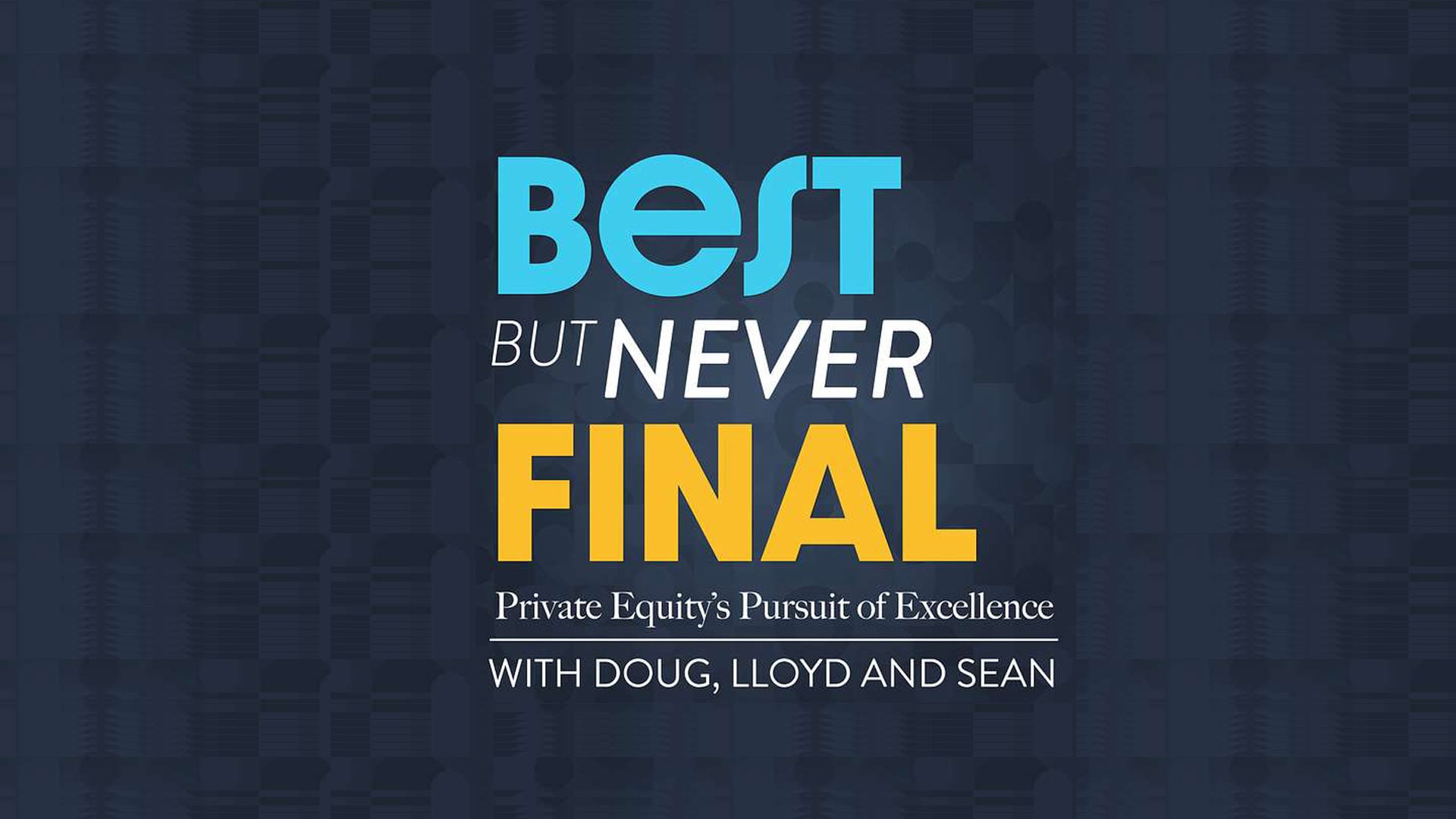
Join Doug McCormick from Oridian Capital Partners, Lloyd Metz from ICV Partners, and Sean Mooney from BluWave as they explore timely private equity topics and offer their seasoned perspectives on crucial areas of focus within the industry. Gain valuable insights from these industry experts in this engaging podcast tailored for PE professionals.

Related Articles
Welcome To Best But Never Final: Private Equity's Pursuit of Excellence
TRAILER
Private Equity's Evolving Entryways: From Analyst to Operator
EPISODE 06
Private Equity Strategies: Crafting the Future for Transformative Growth
EPISODE 02
Private Equity Pulse: Steering Through Economic Uncertainty
EPISODE 11
Connect with
a pre-vetted
resource now
Do you need an exact-fit, PE-grade, third-party resource for your nuanced due diligence, value creation, or prep-for-sale work? We've got you covered.
To learn more or start a project, contact our client success team at 615-588-4010 or fill out the form to have us call you.