





Home
>
Resources
>
Podcast
>
Best But Never Final
>
Private Equity's Evolving Entryways: From Analyst to Operator
Private Equity's Evolving Entryways: From Analyst to Operator
Podcast
Private Equity Firms
Portfolio CEOs
Best But Never Final
EPISODE 08
Private Equity's Evolving Entryways: From Analyst to Operator
Episode Description
In this episode of "Best But Never Final," delve into the evolving landscape of career entry points into the private equity industry with hosts Lloyd Metz, Doug McCormick, and Sean Mooney. The trio, seasoned in the nuances of private equity, dissect the journey from traditional roles in investment banking and consulting to the increasingly recognized value of operational expertise. This conversation offers a candid look at the prerequisites for a successful career in private equity, emphasizing the significance of intellectual curiosity, the strategic advantage of an MBA, and the diverse skill sets required to thrive.
Episode Transcript
[00:00:00] Lloyd Metz: Get ready to peer behind the curtain of the private equity universe with each episode of Best But Never final.
Hi, I'm Lloyd Metz, joined by doug McCormick and Sean Mooney. Together,
we'll navigate the corridors of private equity, revealing the uncommon knowledge and Challenges, successes, and lessons that drive the world of private equity and business forward. Let's go.
[00:00:35] Sean Mooney: I am very glad to be back here with my friends, Doug and Lloyd. Doug and Lloyd, how are you guys?
[00:00:41] Doug McCormick: Great, Sean.
[00:00:42] Lloyd Metz: Happy hump day.
[00:00:43] Doug McCormick: guys. Here we go.
[00:00:45] Sean Mooney: Absolutely. Let's get it on. So I think this is another really kind of interesting episode for those who Are aspiring to get into private equity and probably also interesting for those maybe the most recent generations who came in and also those who've been in for a long time to just discuss really the evolution of the pathways into private equity, how they existed when we were all coming in
And how they've evolved over time Does that sound like a good plan, Lloyd and Doug?
[00:01:16] Doug McCormick: You got it.
[00:01:17] Lloyd Metz: Sure.
[00:01:18] Sean Mooney: So let's kick it off. And so we're going to go into the way back machine here, and we're not going to say how far away back, but let's just say it's been a while. and so maybe Lloyd, if you want to kick it off, what was your kind of path into private equity talk about, really from the beginning really start with the precursor roles. And I'd love to hear a how you kind of approach that path and be how those precursor rules kind of prepared you in some ways and maybe other ways it didn't
[00:01:47] Lloyd Metz: Okay. And the way back machine. So we'll adjust the dial on this one, but go way back further than I think you may have intended. But remember reading Forbes magazine at an early, early age. And that's where I first heard about, learned about investment banking and leverage buyouts and investment banking sounded super cool, super interesting.
You made a ton of money. You worked really hard, but you were Shaping and crafting all sorts of interesting transactions and deals. That were in the newspaper all the time and then leverage buyouts sort of flew in the face of what my limited understanding of like the efficient market theory, right?
Like the stock market supposed to be efficient. So how can you come in and pay a premium to the stock market price and then ultimately make 3456 10 times your money like that? Just seemed crazy to me, but it seems super cool and it seemed like a really, massive multiplayer competitive game to put it in kind of video game terms. And that's, I was hooked. That's what I wanted to do if I had the chance. And so coming out of college, went into investment banking, still didn't know Jack about investment banking. My parents knew nothing about it. They thought I was going to be a stockbroker or something. I barely knew what investment banking really was, but that was my entree into finance and wall street went to business school. Learned more and we can talk about that more later. And then after business school went back into investment banking for a couple of years. And then got an invitation to interview with some private equity firms and got my first job and off I went.
[00:03:32] Sean Mooney: double tap on a couple of those and for me personally as a kid grew up in texas i know cleveland investment bank and the only way. Is that I figured it out was because my roommates were all from Northern New Jersey and, all their parents were in the industry.
And so, I asked him like, what are you going to do? And they said, I'm investment banking. I go, what's that? I have no clue. , Doug and I were talking earlier. It was like, I grew up working in the back of chemical plants. You're like, I don't know. What was even the premise, like, even know that, I know there's a Forbes article, but how did you kind of figure out like, oh, this is a way that's going to be getting to this interesting career
[00:04:08] Lloyd Metz: So the way, way, way back is father was an engineer at IBM and one year they hit their sales goals or whatever it was. And they would get stock as their bonus. And my homework assignment every night was to watch the news. And they would show the ticker tape, the closing prices, and my job was to see if IBM stock went up or down.
And that's how I got introduced to the stock market and kind of was into it. And then my father came home from work one day and was like, I hear this magazine is good if you're interested in stocks. And it was Forbes. And I just read it cover to cover and just went from there. That's how I got exposed to it.
And during sort of high school era, that's when investment banking was starting to really emerge and become a thing. And so there were articles about investment banking and different bankers and different firms. Every issue, right? That was what was driving the business news at the time. And so that's how I became aware of it.
Went off to college intending to be an engineer of some kind, and that's where I did all my. Internships, but they weren't as interesting or as exciting as wall street or investment banking finance
investing seemed to me to be. And so I decided
not to fight, that feeling and just
at the turn down offers to go work at GE and other places and decided to try my hand and
jumping in on the investment
banking pool.
[00:05:37] Doug McCormick: it just strikes me as I hear your description of growing up and Sean as well. I mean, in some ways I think investment banking in the 80s was the growth industry, the way e commerce was in the 2000s, the way AI is in the 2020s. And so I think we all gravitated to like the industry that in our formative teen years.
Was really exciting and growing and evolving
quickly.
[00:06:02] Lloyd Metz: That's right. I think that's a fair characterization. Absolutely. But also just on the investing front, it was a more active form of investing to me, right? So even after business school or during business school was. Debating whether or not to follow the investing interest into the public markets, the liquid markets, but ultimately was pulled back onto the private equity side because he sort of didn't have to wait for transformation or you didn't have to be an activist and rattle the cage and try to browbeat management into making change with private equity.
You drove the change. And to me, that seemed a better answer. More interesting path to go
down right or
wrong, rightly or wrongly,
[00:06:44] Sean Mooney: and maybe before we jump into when he got into
private equity, I'd love to drill down a little more on your investment banking time until investment banking historically and traditionally has been the primary path into the
deal side of private equity.
And were you doing kind of the New York version of investment banking, the West coast version, where were
you
doing your,
[00:07:05] Lloyd Metz: the New York
[00:07:06] Sean Mooney: okay.
So that's, yeah, that was the version I did as well. And so tell me,
what was it like?
[00:07:10] Lloyd Metz: Well, time out, time out. can't get off the hook that easy,
right?
[00:07:13] Doug McCormick: I, Lloyd, I didn't know there was anything but a New
York
version. Come
on.
[00:07:17] Lloyd Metz: Okay,
[00:07:17] Sean Mooney: here's, here's what I'll say.
[00:07:19] Lloyd Metz: you open that door, Sean.
[00:07:20] Sean Mooney: This is shaded in the 90s. Let's just say there was the New York
version, and then everyone
else got to work human hours and roll slackers.
[00:07:29] Lloyd Metz: Uh oh.
[00:07:30] Sean Mooney: This was the version where you get crushed and you worked 120 hours a week. And your mother comes and visits you and starts
crying because you're so gaunt
because you
haven't been home and
60
[00:07:43] Doug McCormick: Wouldn't it be nice to be gaunt again? I mean, back in the
good old
days. Yeah.
[00:07:47] Sean Mooney: I look back and it's a good point. I
kind of wish I had that
figure again.
Now there's branded
as the New York version where they just crush you.
I'm sorry.
[00:07:57] Lloyd Metz: There are people in other parts of the country that think
it would take issue with your characterization, but
let's get on to the real point of
your
[00:08:03] Sean Mooney: Yeah, that's, that's all I know. We just, stir up the hornet's nest, but uh, what was it about that experience? And I'm guessing this was an analyst program where it used to be two to three years. And now it's probably more like a two year program. We'll talk about that. But what was about that experience that you think ultimately?
Prepared you for the rest
of your career
to get into private equity, which probably maybe informs a lot while it's still kind of one of the primary feeders
into private.
[00:08:33] Lloyd Metz: Well, with investment banking, you learn a lot of the fundamentals of financial analysis of companies, right? So balance sheet, income state, cashflow and the components of it. And you can make the case that that's a good starting point. And I think that's probably a good fundamental starting point for a lot of business careers, to be honest. But when you're talking about private equity and you're talking about growth and what does growth do to your balance sheet? What does growth do to your working capital? What does growth do to your fixed assets? That's part of how you start learning in investment banking. You also get a heavy heavy education in selling and sales right because an investment banker is trying to figure out how to Sell a company to somebody who would want to buy it and figure out who would want to buy it Whether you're trying to sell bonds, you're trying to sell an equity offering in an IPO or something.
Right. So how do you position the company? How do you describe the company? How do you describe it in such a way that it will be attractive to investors? Or capital providers. So that's also a useful skill as well. You do learn some degree of diligence, right? So questions to ask a company about their income statement, their balance sheet, their cashflow statement, how do they grow, how do they shrink?
Why this business line is growing. Faster than another business line what have you. So those are all good fundamental learnings and lessons that you get a lot of reps in investment banking. And that would be the third piece I would say. So not only the understanding the financial three part financial statements and, how a business's performance affects those is reflected in those not only on diligence and questions and how to understand how to get information from a company, how to position that company to be attractive to a capital provider, but you also have a view around a good business, with time.
And that's the thing. Investment banking gives you a lot of reps, right? And so with more reps, you can start to develop your own point of view, either your view as well as the external view. What makes a good company? What makes for a good company? What makes for an attractive company to capital providers?
What makes for a good business that is profitable or growing or high margin or whatever it is, you start to develop some of that experience when you get many, many reps
in
investment banking, So good for those four
reasons, I think.
[00:11:15] Sean Mooney: I think that's absolutely kind of aligns with the experience I had, whereas you get lots and lots of lots and lots and lots and lots of reps. but you're learning the fundamental levers of value and how to value a company what makes some companies more valuable than others vice versa and the only thing i might add is it because of the intensity of at least experience that i had was.
It teaches you a lot about grit, I think Doug got, probably a more real form of the experience then, us talking about what was me like, sometimes my sushi got delivered late, when I was 22 years old, but you're just, you're working 120 hours a week.
And when they told me 120, I never believed that could be true. And then, when I'm in my first year and I haven't taken a day off and, Literally six months and I just worked 45 hours without leaving, it teaches you a new muscle that you didn't have. And I think, at least for me, it combined me as like you find a.
An ability to consume information, rapidly, and trains you through pattern recognition in ways that you might not get just because of the intensity of that experience, and maybe I think an interesting way to structure. This is we'll kind of walk this sequentially is kind of our first roles.
And then we, move up and through into P. So Doug you had a different start to your
career and, I, you know, at the risk of uncomfortably flattering you, I'd say a more noble path
Then I took certainly. So why don't
you share kind of your beginning story?
[00:12:39] Doug McCormick: So first of all, there's a couple of common themes between me and Lloyd. I had a father who was very interested in investing. And so at an early age, I had established
a habit or an interest or a hobby and investing in so then went to the academy took economics because they don't offer a business degree did service and then decided I was going to make a transition to business school.
So we'll talk about business school later, but unlike you guys, I actually really needed that as a way to segue into understanding like the language business. And then my first job was at Morgan Stanley and actually, uh, one of my first colleagues was Lloyd. So we've, we go back to that time together.
I I had a different experience. I was an associate, which in some ways I think is even a more painful position in investment banking team. Not because you work harder, but because you're the middle man between like the bosses who are selling and the analysts who know the work and are doing a lot of the work.
And so that's a kind of challenging. Place to be in the team, but I would say regardless of where you are as a junior person in the bank, the things that I hear you guys saying are you learn the language of business, you get a ton of reps with a ton of variation. I like to tell people like the great thing about it.
And the bad thing about it is it's dog years, right? So two years of investment banking is really, five years of experience. And I think you do get the grit in some ways. I think the grit is really a branding opportunity, right? Because I think people look at folks who have come from that experience and they know, Hey, they know how to really elevate their game, at least for a short period of time while the project gets to a critical stage.
So anyways I think we all feel blessed to have had that experience the same way I feel like my service opportunity was a wonderful experience from a growth perspective. I think the couple of years of Morgan Stanley that I had was foundational in having a perspective, but candidly, like I didn't find it as rewarding as I was hoping.
And I think the transactional nature of investment banking can make it challenging because you want to see the outcome. You want to feel like you're accountable to the plans that you often are selling. So I found it to be a great experience. But one that I ultimately decided to pursue private equity because there was more of a tighter link between.
The plans you established and owning and being
accountable for delivering those
plans.
[00:14:58] Sean Mooney: One thing if you're open to it, I'd love to just get a little bit more on the backstory is one thing that I've certainly see from our vantage here. In private equity there are a significant number of very successful people in private equity who started their career in some way shape or form through one of the branches of the US military and I'd be curious,
What is your perspective on that?
Because there's clearly something there. And you're learning something as part of that,
service that must be
saying some sort of foundation as well.
[00:15:31] Doug McCormick: I would
say in many ways when I see service
members kind of transitioning
to business, I think the
trajectory is
slower to start. Right? Takes us a while to kind of get up to speed. We don't fully appreciate. the early lessons that you guys had in your investment banking analyst days. But I do think, that that service experience can often be valuable in your later career stages.
So I think the service members get a great opportunity to practice leadership at an early age. Values based management understanding how to be general manager in a very intense environment. So I think it's a great experience that can be applied broadly in business.
And candidly, I think the private equity universe is simply one aspect of the business. I do in some cases think private equity is a leadership light. And so I purposely try to find ways that I can exercise my leadership values either with portfolio companies or internal to our team.
Cause that's a skill set that I'm comfortable with. But I don't know that that's broadly practiced in the
industry.
[00:16:35] Lloyd Metz: and Sean just to jump in here for a second. I agree wholeheartedly with what Doug's pointing at. You had said something earlier about investment bank. Teaching you some of the fundamental levers or drivers business. It teaches many, but it falls short in some key areas and leadership and the importance of, I'll just say management, but the difference between management and even leadership, I don't think investment banking really does a good job of teaching and the military branches, I think do a much, much better job of that in a way where you can actually have an impact at a fairly young age.
In your career progression as a private equity professional or even investment banking, but certainly private equity
at the portfolio companies, your interaction with the leadership team at your portfolio companies and how to
motivate people and understand where they're coming from and get
them to do what you want them to do.
That's what y'all learn
in the military all day, every day.
Right. So,
[00:17:39] Doug McCormick: Yeah. It's kind of interesting, right? Like in some
ways, and
This is by design of the investment banking business
model. I'm saying to you, I'm going to
give you a very
difficult job, but I'm going to give you the highest talented, most highly motivated young folks you can find, and I'm going to give you enough financial resources to pay them whatever it takes to make them do the painful things you're going to ask.
So that's one scenario and you compare that to. A service choice where, you have a population that's much more representative of the broader U. S. population and you're going to pay him less and you're going to ask him to do, arguably more challenging, more dangerous things with less directly aligned incentives.
And so I think by definition
That really causes you to get good
at the leadership
aspect of it.
[00:18:22] Sean Mooney: Yeah. Both those points are, spot on. I certainly felt that I think as I was coming up, it's interesting. So I grew up in a family business and I would look at my dad who was building a company that at some point was kind of getting bigger and bigger. And, as a kid, I grew up going to work with him on Saturdays.
Yeah. And then as soon as the federal government would allow, he gave me a hard helmet, but the lessons I learned investment banking was exactly, I think what you shared Doug, and that you have incredibly capable, motivated, smart people who are high achievers. And our objective oriented and so they're going to do whatever they need into your point.
100 percent also felt this idea. Like I didn't feel like I was getting trained to lead people. I was getting trained to do whatever it took to get something done. And my review virtually every year at the end of the year was. Your review is your bonus literally you'd get that one day before it hit your checking account , it would be so unsatisfying because like, well, what can I do to get better?
It's like, just do better kid. Okay. Like, what do I do with that? It's like, just do better. And here's five more deals to work on like, and so think those are great observations, but I do with that. And having said, I think that's the reasons we talked to us. One of the reasons it's such a great training ground for people who hope to enter into it because of the levers of the value, the repetitions, the laps.
And Doug, I think your point about dog years is absolutely correct. This episode is brought to you today by HCI Equity Partners, a lower middle market private equity firm focused on partnering with family and founder owned manufacturing service and distribution companies.
ICV Partners, an innovative private equity firm. Supporting management teams of leading companies at the lower end of the middle market and BluWave, the business builders network connecting the most proactive business builders in the world with the best of the best service providers for critical variable on point and on time due diligence and value creation needs.
Now back to the episode. So maybe if we kind of move along our sequences and let's talk about business school, at least, back in the day, business school was a standard part of the process.
I'd be curious from both of you why do you think people attend business school and what did each of you get out of that experience that helped you, through the subsequent progressions
in your career?
[00:20:52] Lloyd Metz: So business school again, was aware of it. was intending to go to business school when i graduate from college was just something that seemed like it was a really neat cool thing to do again back to the same articles for all mba is from. Is great schools that the time i was like wow that'd be so amazing if i could go there so was able to keep that in mind and not forget my gmat scores they didn't expire on me so.
I was good on that front, but in the work context, had a, I had an incident, if you will, where I was working with a person who had come out of business school and it just that the competitive part of me, just like I was getting my ass kicked. I was like, just the frustration at seeing power.
of simple frameworks and how you organize your thoughts in writing and putting them on paper is so much more effective and powerful than a lot of times just spoken commentary. And that's what I experienced with this person would come. And it wasn't anything super elaborate or fancy, but just typing something out in an organized way on a single sheet of paper Landed with such impact and much more, it just got through to that VP or that MD or whoever we were working with relative to my oral comments based on like some handwritten notes that I'd prepared before we sat down.
And it was that kind of experience. I was like, you know what? In case I might've been wavering about going to business school, it was not even a question anymore, right? Like if that's the kind of stuff you learn there, those
little tactics and techniques sign me up. So, that just pushed me even with more enthusiasm to go to
business school.
And we can talk about that
more, but I definitely
think in preview, it's absolutely, it was worth it then and it's worth
it now. And we can get into more detail
about that.
[00:22:53] Doug McCormick: So first of
all, I would acknowledge, I think business school for many people, I'll put myself in this category,
it creates an
opportunity to pivot, right?
So I had done
my service and I realized that
was not going to be a career for me. So I was looking to move to a different industry. And so I really needed that experience. told you, I was a hobbyist investor. I think I understood what a PE multiple was. I didn't know what he meant. So how to get to E was a mystery to me at that point. So I really needed the education. But I think people think about business school and go to business school for really five different reasons.
One is, listen, I don't think it's just simply a math question. It's an experience, right? It's a life experience. The second is, I think it can be branding. You go to Harvard and there's some good brand aspects of that, candidly. There's some bad brand aspects, but it, there's a branding element to the choice.
The network is ridiculously good. And I think the older you get, the more you appreciate, like, The value of the network is significant. And then I think there's optionality aspect of going school. I think it gives you the chance to pivot at that point in time, but also pivot in the future.
And then the last thing I'd say is there's the skills aspect. And I think that's by far and away, the least important, right? Like the things I actually learned in the classroom the concepts I don't think are that earth shattering. And I think I probably with diligence could have done of that.
Yeah. Through my own personal study, it's certainly an aspect that's positive, but I don't think that's why people
really go and find value in the experience.
[00:24:18] Sean Mooney: Both of those resonate a lot with me and I probably had a slightly different path to it in that. So I had gone from investment banking to a private equity firm and I progressed, reasonably quickly in my career there. And I got to the point where I had reached a vice president level.
And one of the big challenges, if at least back then, if you go to business school, you're going to come back as an associate. And so I was saying, man, I'm going to come back to a demotion and I'm going to have to pay for this thing. And so I just kept on charging along you're kind of a well honed machine when you're going through that gauntlet for so many years.
I was like, oh, I don't need this. And a couple of my bosses are mentors really took me aside and said, Sean, you really should think about this, for all the reasons, Doug, that you shared and they said, well, one of the things that, we want to invest in you. So what if we put you through business school on our ticket for you?
The catch is we're going to put you through the executive program and the catches is you're not going to work any less. And so what I call is my blur years where it was every Saturday, every Sunday, 12 hours of class each day. And you blitz through it in 20 months. And in the same vein, I'm working just as much as you do on a normal private equity career.
And I'm newly married. I've
got all these things going on. I think I tabbed it up. I released wires on six deals from class over the course of those 20 months with my little Blackberry.
But you know, I think the, because
this was Columbia where there's a number of people like me
that professors were just used to it and they would just give us a pass. Like, all right, go do your thing.
And I'll tell you, went into thinking, okay, I need the credential, it'll be a tiebreaker for the rest of my career, let's go do it.
But as I reflect back on it, I think Lloyd, for a lot of the things that you also
shared, I think it really helped round me out a
lot and helped with my presentation skills and working outside of this machine of private equity, which
can be kind of a closed loop. And it filled in a lot of
the shades of gray outside of things that I didn't know before that I
thought I did. And so I think I was
better for it as well coming out of it. But I was a skeptic
when I went in because I thought, Oh, I have to do this. And,
I'm back to my analyst, working hours again. So I don't know if any of that resonates with you all.
[00:26:42] Lloyd Metz: it does. I differ a little bit with Doug. Think you do learn a lot more than people like to admit in business school, not just in the classroom, but for my classmates or, there are classmates who would say some things in class and I'm sitting there going, holy cow, where'd you get that from?
And literally would talk to the mapper. It's like, how did you come up with that? Right. And you learn about their different experiences at different companies or different firms and different, whether it's consulting or corporate role or something. think you do learn a lot more than you.
Generally hear people admitting to and the tricky part, at least for me, my experience, a lot of the concepts that you learn, you come out of business school, you have your first few jobs, you don't always put them into practice in those early years after business school. I find that later and even today, those concepts are still useful and having that pattern recognition that you might've learned 20,
25, 15, 30, whatever it is years
ago, it's still applicable.
Some of
the concepts are, I don't want to say evergreen, but they're
long
lived. And so to me that's a good thing.
That's it's worth going just for that
alone.
[00:27:55] Doug McCormick: Yeah, I think that's fair. I meant
to highlight, I think a lot of the learning is informal and out of
classroom as opposed to like a undergrad experience
where it's like content is the whatever you get from the teacher.
[00:28:09] Sean Mooney: I'll tell you interesting angle from the path that
I did for those of you thinking about the executive program. It's a blur, but what's really interesting is while you're in your job, you start trying the things they're talking about and you bring it in. And we would go through these case studies.
And it was, I had tremendous sympathy and empathy for the poor professors teaching case studies. Because 80 percent of the time, the case study they were trying to teach, there was someone who was at that company then that worked there. That's not at all how it happened. And it would just be this like tremendously kind of challenging experience for some, poor, really smart professor who's just trying to get tenure.
And they're like leave me out of this. Come on, kid.
And so I think that's a really helpful, I think, setting the stage that I think I know a lot of people
today who are in that kind
of pivotal point in their career are thinking about. So
hopefully that gives some context.
[00:29:01] Doug McCormick: Just one comment to acknowledge as we think about like our experiences versus the folks navigating this decision tree today.
My general sense
is when we all went through school, most people that went through school were kind of going back to business school. Anywhere between two and four years out, right?
And so they're graduating in their mid to late twenties. And I think that experience gap between undergrad and business school continues to extend a little bit. So I think most folks are going back to business school later. And I think you had to combine that with at least the private equity industry continues to mature in a way that entry points happen earlier and earlier.
So it's an interesting kind of juxtaposition. And we're talking about getting into private equity in the context of
business school, the mismatch of timing. I think it's increasing.
[00:29:48] Sean Mooney: And maybe that's a good segue here. And so we've kind of worked through these precursor roles. We've talked about business school and the time that we came through private equity. And then after that, we kind of, all three of us ended up or stayed in private equity, through there. And then we went on the normal cycles that we've talked about.
a number of these other episodes and so let's talk about today and what are the pathways into private equity? How do you get there? are there more or less pathways than there used to be when we started? In the way back days and so, why don't you kick off like, what are the pathways into private equity today through kind of this, that first role and then, business school and then afterwards
And how maybe does that differ depending on which part of private equity you're trying to get into.
And being specifically there's now multiple
ways, there's deal teams, there's ops teams, there's
everything in between.
[00:30:45] Doug McCormick: I'll try to peel the onion on this a little bit, but I would say there are more pathways into the business.
But those entry points seem to be earlier and earlier. And so I'm always surprised having watched both of my kids kind of grow up and navigate some of this relatively early in the college experience, kids are already seeking internships in the finance industry, broadly, money management, investment banking, et cetera, because they're trying to compete for their junior year internship, which is likely to lead to a job.
And, the most common track continues to perpetuate the folks that end up getting an opportunity to be a private equity analyst or associate generally do so from a two or three year investment banking career, which was the by product of that junior internship. And so that's probably the most tried and true and most common route.
But I think also there are a lot of other entry points. personally believe if you get back up and talk about the things we said. That were offered in investment banking. It was this dog years intensity. It was varied experiences and it was, highly capable teams. And I think you can find that in like consulting as well.
I think you can find that in the startup industry. So I think there are other ways to kind of get those similar experiences that are equally good at branding. The problem is the network overlap isn't so good or isn't as good. Because we all have a tendency to hire folks that had similar experiences to us because we understand them.
So Lloyd, when you know, you're interviewing an investment banker, you know, kind of what that experience entails and how they can fit into your organization. And then just to comment briefly, Sean, I think you're asking also how the operating roles have proliferated at private equity firms.
And that's an additional entry point. And in many of our episodes, we talk about, the nature of the game today is building value in the businesses that we own. And that comes not only from the skills that Lloyd has, but also by complimenting those skills with company operators. And so I think there's a role and a legitimate entry point in career path from folks that are coming from the operations
side.
[00:32:46] Lloyd Metz: Yeah, do wonder, I don't have a clear point of view on this one, but for some of those other paths, let's say from the operating role, do you come into private equity a little bit More tenured, right? Because you've got to get more experience either as a functional executive or, it takes you a bit longer in a corporate environment to then have P and L responsibilities to now call yourself an operator that would be, useful to a private equity firm.
wonder. Coming straight out of college, I don't think you can go do two or three or four years in an quote unquote operating role and then jump into private equity. Not so sure that it works that way. I still think consulting is a really good path into private equity because there's a whole bunch of fundamental levers that you learn as a consultant, even as a analyst or an associate.
Good.
That are super relevant useful
in private equity.
[00:33:44] Sean Mooney: I think those are both really kind of accurate. And it's interesting from this vantage here, BluWave, where we get to see kind of, a large number of private equity firms are doing it. And the thing that kind of strikes me as I look at it and compare and contrast versus when we were coming up is.
It seems like the deal side is still a quite linear path where you need to get in at the beginning. It's harder to kind of come in from the side at more senior levels of your career, because it still is very much an apprenticeship role where you need not 10, 000 hours, but 20, 000 hours to become a deal partner.
, it seems like the one on ramp into private equity. That's from the side is after business school. Where you can come in but it's still like you're starting on this path and you got to maybe think a little further earlier in your career to get in that one of the great evolutions that I've seen, though, is there's a lot more in rows and on ramps through the upside.
And I think you're right, think private equity is hard for anyone to start right out of college. I'd encourage someone to go get experience outside of it. Before they come in, because there's just the expectation of having skills and these organizations are small and they don't have the training machines built in at least at the earliest stage.
But if you think about the ops team, you can come in multiple ways because it's not, the skills that you're bringing are so specific and specialized that you're going to get at a operating company. I still don't think you can come in like year one. But, particularly the larger private equity firms are mechanizing so that they have many consulting firms almost within their organizations.
And I think that's one of the best evolutions of private equity is that there's so many inroads now. Whereas it used to be maybe when we were coming up, if you weren't on the deal team
by the time you're 26, there's just, you couldn't come in unless you were like a CEO of a company
[00:35:38] Lloyd Metz: a little bit of that, I mean,, we're talking about different
paths that exist now that may not have existed back when, the Kennedy administration ended and we dug and I got into the industry, but I know some firms will take their associates, their pre MBA associates or analysts or whatever you call them and then give them a third, sometimes fourth year at a portfolio company, right?
Because They were watching that business. They were helping that business evolve and grow. And oftentimes those businesses don't have enough young, aggressive, curious minds that know how to work hard. Right? So putting those people a role at a
portfolio company actually can help drive value. And it's a good
experience for that person coming out of private equity they get more of an
operator's perspective. That's not just the financials
and the numbers or the KPIs, but just what's behind
that. That's good
experience.
[00:36:33] Doug McCormick: Yeah. A couple of comments. First of all, we've had really good
success with. Taking junior folks that have been in associates and then pushing that to a company for a period of time. I would say it's less about what their contribution to the company. Although I think, there was, I think it's for them to see the difference between theory and reality.
Like you can have a bunch of great ideas and you can have insights from reviewing the financials, but does that message get to the operators that have an impact on the P and L that real world experience, I think is super valuable.
One other thing I want to just comment on, Sean, that you highlighted is it was the thing about these entry points of operators.
I think you can define the operator from a functional perspective, like it's functional expertise, or I see people defining themselves as industry experts or domain experts. And so I just think it's important to distinguish, if you come from the operating side, are you developing a functional expertise?
Are you developing an industry expertise? And I think we're being a little too rigid in our definition of Being in a private equity model because I would argue, being a CEO of a private equity backed portfolio company is like 80 percent of the good. And maybe you get rid of some of the bad, right?
Because you still have this mandate. You got access to capital. You got really interesting incentives to align you around a common end state that creates value. So I think being a PE backed CEO, I would say while you're not in the GP,
that's an interesting way to think about being part
of the organization.
[00:38:00] Sean Mooney: think those are all really great points. And I particularly appreciate the points you said, where you're kind of encouraging, Young professionals who maybe have the foundations of private equity to then go get a little bit of operating experience. As I reflect back on my career even just kind of this crazy journey here, having
done BluWave, I always tell friends of mine is like, wow, if I were ever to go back into private equity, I would have been so much better.
just like, you're like, what do you mean? You can't do 15 things at once. And now I'm like, you can't do 15.
So I don't know that anyone would ever have me back.
But if I did, it would be, I'd be like Neo looking at the ones and zeros cascading down in the
matrix. And so think that operating experience is something that I wish
people did more of. And, this kind of like in residence program, almost like you guys are describing, where you encourage people to go down to the portco for a year
or two, I think would add tremendous value for, the next 20 years so like Doug, let's bring this all back, kind of the full circle and maybe bring us back to the kind of where we all started. And if you were each talking to, or getting questions from someone, let's say they're in college and they're interested in this whole world that they have an understanding of as private equity.
Okay. What advice would you give them as they're thinking about nurturing how they grow and develop and positioning themselves for success?
And
then also potentially a career in private equity,
[00:39:35] Lloyd Metz: Sure. So a really, really interesting question, Sean, and maybe we can have a
whole nother episode on this later, I guess. But I would say to anybody who's interested in private equity, Whether you're in college, out of college, in a job or what have you, there's so much information available on the industry and the individuals and the leader, like every private equity firm has a website you can go read bios for days if you want.
There are podcasts, there are publications, there's newsletters, there's blogs. Like you just got to get out there and start consuming the information. But most importantly, you also got to remember it's an investing job and do you want to be an investor? So there's a whole bunch of stuff to read about developing an investor's mindset.
What does that mean? How do great investors think? There's a whole school of thought that says, great investors are just fundamentally wired differently than everybody else. But let's put that aside for a second. But do you find that interesting? Like don't lose sight of that too often.
I run across people who went to the school, did the internships, got the investment banking job, got this job just to kind of almost like check the box, but there's no curiosity. There's no initiative, there's no view of upside and risk and, losing money versus making money. And some of those decisions that all investors have to weigh.
And so you're kind of missing the point if you don't
get that part, right?
[00:41:11] Sean Mooney: I think it's very, very sage advice is, let's look at the big picture. What's really important. You're going to be an investor, and there's
certainly, we can talk about the internships and things like that, but if you don't get the first part, right, you're just going to be forcing something
upon yourself that you're never going to find satisfaction.
And if that's not
truly what you're interested, how about yourself?
[00:41:30] Doug McCormick: Yeah. Like I, what you said resonates with me and I'll say it slightly differently,
which, is like everybody that's pursuing this industry. They're likely smart. They're likely very
ambitious hardworking. But like, it's a competitive industry. You're not going to be good at it unless you're really passionate about it.
And that passion. Kind of manifest itself in intellectual curiosity in stick to this. And I also think this is a business that's really like multifaceted in terms of skill sets. Like it's selling its interpersonal skills. It's being an independent, and sometimes contrarian thinker.
And so, I would just encourage folks if this is what you think you want to do you kind of got to run through walls, right? And I say that in the context of like, not let anything get in the way of your goal and be committed and passionate about developing your skillset in the area.
I also think, Lloyd, there's this balance between you say be careful just to go check the boxes. But I'll use one of your analogies like, play chess, not checkers. I do think that the skill sets and experiences that position somebody to pursue the industry are often multiple.
So it's not like you're just going to do investment banking. I think you get to continue to position yourself with a differentiated,
Set of experiences and brand.
[00:42:43] Sean Mooney: Those are both really good sets of advice. maybe what I will double tap on is. Hey, you got to have the first principles. You got to have the curiosity, got to have the drive. But I'd also say, if some of our listeners here, have kids that are interested in this, if you're a young, aspiring professional in the space, but also be thoughtful about how the inroads are structured.
And so when you're in college, think about getting that internship, that's going to prepare you, that's going to give you some of the skills so that you're not coming in and unfinished product. And to build on your analogy, Doug, if you're going to play chestnut checkers, you got to play several moves ahead.
And, today if I took myself this kid from Texas, who didn't know any of this, I don't know that I would be able to kind of still maneuver my way in, in the industry that's orchestrated the way it is now. It doesn't mean you can't, and it's not impossible, but what we talked about in one of our earlier episodes, Lloyd, when you said, like, be like water,
Go where
it flows easier. And so if you can try
to do that as well, but don't lose. The first principles way that you talked about in the beginning,
[00:43:48] Lloyd Metz: Right. don't disagree with that, but I guess call me a little extreme, but Google is like the best thing ever. like, there's so much information about so many people and I appreciate folks who reach out right and say, Hey, can you tell me about your career? But you know what? My career is on LinkedIn.
Like the expectation is you should, even if you are that kid from Texas, like you can ask some next level, second level questions. If you just go see me on LinkedIn,
right. Or Doug or anybody. So use Google and
the tools at your disposal, learn a bit more than,
Historically was ever knowable
before now, right?
Like use that to your
advantage,
[00:44:31] Doug McCormick: If I could, I'd just like to
offer kind of
a counterpoint to this whole
conversation. So there's a saying up at
business school at Harvard, which
is if you want
to predict. the industry that's about ready
to like you know, crash,
look at where all the business school students are going.
And that's an indicator, right. That you've hit the top of the market. And so like we've just talked about everyone's go to, in the private equity and, I kind of referenced investment banking in the eighties, that was a growth industry. Arguably, alternative assets has been a huge growth industry for the last 20 years.
And I think in some ways it's rapidly maturing and the prospects for. Wealth creation and career progression, while it's a much bigger industry, the trajectory is probably going to be different in the next 20 than it has been in the previous. And so, if you love the content and you love investing, I think this is a great choice, but I wouldn't do this necessarily because you think it's a guaranteed path to riches.
And be willing to be a contrarian. The way we talked about here is that good private equity investors are to go figure out what the next big growth industry is, right? Is that artificial intelligence? Is that something else who knows? But I just think putting The maturity of the asset class in the context of your decision, if you're
a 25 or 20 something making this choice.
[00:45:46] Sean Mooney: think that's absolutely right. This is a maturing industry. It's not just something where you're going to get on a boat and the tide will just continue to rise, but if you're passionate about it and you have the drive, let's go and talk to people like Doug and Lloyd, if, you grew up in the same town as they did reach out to people who, friends of neighbors, use chat, GBT, read books those types of things.
So maybe just around this out and there's, we could go forever on this topic. And it's a really important one. If you could give advice, one or two books that you think,
a young, aspiring
professional should read to. Learn the, art of just being
good at business and life.
What would it be?
[00:46:26] Lloyd Metz: green eggs and ham,
[00:46:28] Sean Mooney: I love it.
[00:46:29] Lloyd Metz: hands down. Cause That's selling
and not giving up, right? That's finding different contexts and occasions because all those things matter, right? Being on a boat is different than being with a goat, right? Being on a train, different than being in the rain, but
you keep it up and you'll get through,
right?
[00:46:52] Sean Mooney: I love it. No, I think that's a great one
Doug, how about
[00:46:55] Doug McCormick: I'm, I'm going to give you one that's,
An oldie oldie, but a
goodie. And so, when I was young, I read,
One up on wall street by Peter Lynch. And it's really a simple straightforward
read, but I think it'll help you determine if you really like investing because it talks about products that you would know and have an affiliation with and have a view on.
We'll be successful in the market. And I think that's the kind of principled perspective that you got to take as a PE owner of going to be in this thing for a long time. It's not a trade. I'm
trying to get my head
around conviction
of a long term opportunity. And so anyways, that's an
easy, fun read.
[00:47:31] Sean Mooney: I think Lloyd, you hit the, kind of the skills for
life. And then Doug, you mentioned kind of this foundational investment book. So I'll check the box on, the slightly more modern, but just kind of what makes a business great. And so I would go with good to great, which I think is another kind of primer.
And if you read each of these three. That will,
Position yourself
for success in private equity. That's truly what you want, but also anywhere else that you can and should
and will go online.
[00:48:00] Lloyd Metz: Yeah, no argument here on Good to Great.
[00:48:03] Sean Mooney: All right. Well, I think, we've shared a lot. I've learned treasure troves of things that, I wish I knew before and things that I sometimes, wish to forget from the earlier traumatic days of my career. And so once again, guys, a really, really nice, informative conversation here,
[00:48:21] Lloyd Metz: Appreciate the time. Thanks, John. Thanks, Doug.
[00:48:30] Doug McCormick: A special thanks to HCI Equity Partners, a lower middle market private equity firm focused on driving transformational growth through consolidation strategies by partnering with family and founder owned manufacturing services and distribution companies. Learn more at hciequity. com. ICV Partners, an innovative private equity firm supporting management teams of leading companies at the lower end of the middle market.
Learn more at icvpartners. com. And finally, BluWave, the business builders network, connecting the most proactive business builders in the world with the best of the best service providers for critical, variable, on point and on time due diligence and value creation needs. Learn more about BluWave at BluWave. net. For further information on HCI, ICV, and BluWave and relevant topics discussed here in the episode. Please see the episode notes or links.
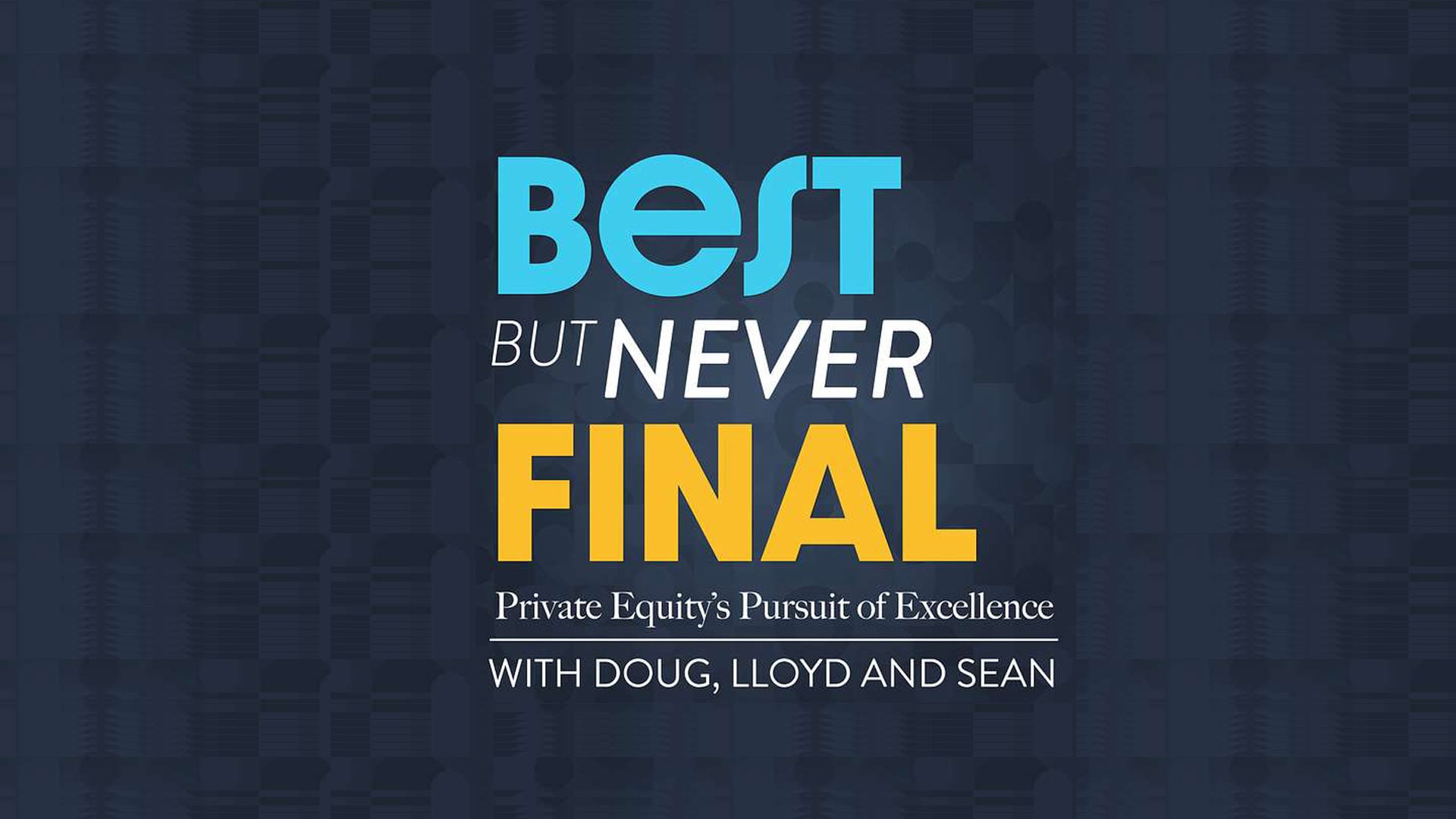
Best But Never Final
Join Doug McCormick from Oridian Capital Partners, Lloyd Metz from ICV Partners, and Sean Mooney from BluWave as they explore timely private equity topics and offer their seasoned perspectives on crucial areas of focus within the industry. Gain valuable insights from these industry experts in this engaging podcast tailored for PE professionals.

Related Articles
Connect with
a pre-vetted
resource now
Do you need an exact-fit, PE-grade, third-party resource for your nuanced due diligence, value creation, or prep-for-sale work? We've got you covered.
To learn more or start a project, contact our client success team at 615-588-4010 or fill out the form to have us call you.